
In simple terms, Zimbabwe is losing wealth that could be created by women due to existing gender gaps in wealth creation opportunities in the economy and society.
Ministry of Women’s Affairs, Community Small and Medium Enterprises Development (MACSMED)
Current research by the Ministry of Women’s Affairs, Community Small and Medium Enterprises Development (MACSMED) shows that gender inequality is costly to the socio-economic development of Zimbabwean society.
The research opines that costs of gender inequality range from losses in income, welfare, additional budget costs and any other lost benefits.
It is discovered that existing gender gaps in industry and distribution of productive assets in Zimbabwe are major contributing factors towards the loss of potential wealth that could be created by women.
(MACSMED) has developed theory suggesting that current labor market practices which are failing to respect equal opportunities across the gender spectrum are at risk of losing potential wealth creation.
However, Zimbabwe has soundly responded by researching and implementing gender mainstreaming approaches to address inequality. With overwhelming evidence of gender gaps in industries and social institutions, Zimbabwe’s cost of gender inequality is summing up to unrealised potential of gender inequality in earning over a life time.
In simple terms, Zimbabwe is losing wealth that could be created by women due to existing gender gaps in wealth creation opportunities in the economy and society.
Gender Director at (MACSMED) Mr Stephen Nyaruwata highlights the exclusion of women in labor spaces is retrogressive towards the Sustainable development.
“In Zimbabwe, women constitute 52 percent of the total population…it therefore stands to reason that labour market practices that do not respect equal opportunities incur potential wealth creation losses which are a cost to sustainable development”.
Stephen Nyaruwata
Research supported by case studies conducted by the World Bank states human capital accounts for two thirds of global wealth.
“At the global level, the World Bank study estimates the loss of woman capital due to gender inequality at $160 trillion whilst sub Saharan Africa capital loss due to gender equality is estimated at $2,5 trillion”,
World Bank Study ( Lange et al 2018)
At local level, the exclusion of women in male dominated industries such as mining, agriculture, engineering and telecommunication are some of the industries that are still untapped by Zimbabwean women.
CEO for Young Women Making a Difference (WMD) Ms Chiedza Matarise a feminist, said women in Mashonand West Province are failing to reach their fullest potential in socio-economic development due to gender gaps in industries.
“The lack of equal opportunities for girls and women in the province therefore entails urge economic costs for them as persons but for their households and country”, said Ms Matarise.
Chiedza Matarise
As the gender disparities continue to widen, limited access to productive assets for women is the key element linked to gender inequality costs.
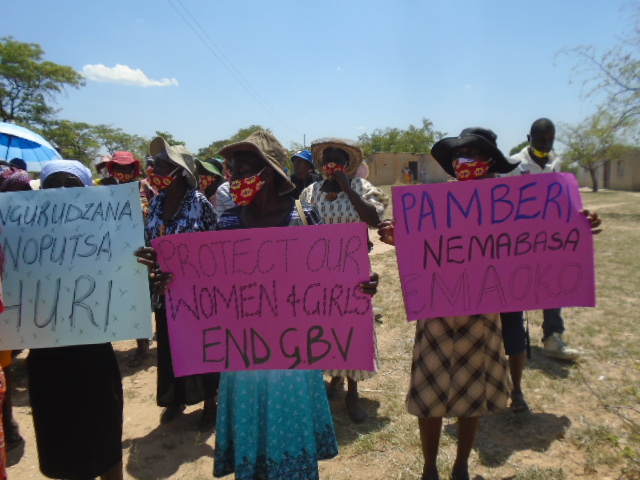
Gender based violence and sexual harassment at the workplace continue to perpetuate gender inequality and affecting women’s productivity at work. As a result, most women tend to withdraw their labour due t fear of sexual harassment.